Trying to choose between Back Bay and Seaport for your next Boston condo? You are not alone. Both neighborhoods sit at the top of the market, but they offer very different day-to-day experiences, building styles, and price points. If you want a clearer way to compare them, this guide will walk you through cost, housing stock, transit, lifestyle, and what each area may mean for your long-term plans. Let’s dive in.
Back Bay vs Seaport at a glance
If you are deciding quickly, the simplest way to frame the choice is this: Back Bay offers historic character, established streetscapes, and strong rail access, while Seaport leans toward newer construction, waterfront living, and full-service amenities.
That does not mean one is better than the other. It means the right fit depends on how you want to live, commute, and budget for ownership.
Condo pricing in Back Bay and Seaport
Both Back Bay and Seaport are premium Boston condo markets, but recent data shows Seaport usually comes in higher on a price-per-square-foot basis. In a Boston.com market recap based on Warren Residential data, Back Bay measured $1,536 per square foot while Seaport reached $1,738 per square foot.
The same reporting also showed higher average condo sale prices in Seaport during Q2 2024. Back Bay averaged $2,120,340, while Seaport averaged $2,773,704. That does not mean every Seaport condo costs more than every Back Bay condo, but it is a strong snapshot of how the two neighborhoods are positioned in the market.
Why Seaport often costs more
Seaport tends to attract buyers looking for newer buildings, high-end amenities, and waterfront locations. Those features often push pricing higher, especially in full-service towers with concierge, parking, fitness spaces, and harbor views.
Why Back Bay still stays expensive
Back Bay remains one of Boston’s most desirable condo markets because of its central location and limited housing supply. As Boston.gov notes in its Back Bay neighborhood overview, the area is known for vintage homes, Newbury Street, Commonwealth Avenue, and major landmarks like Trinity Church and the Boston Public Library.
Building style and condo inventory
Your condo search will likely feel very different in these two neighborhoods because the building stock is so different.
Back Bay condos: historic and distinctive
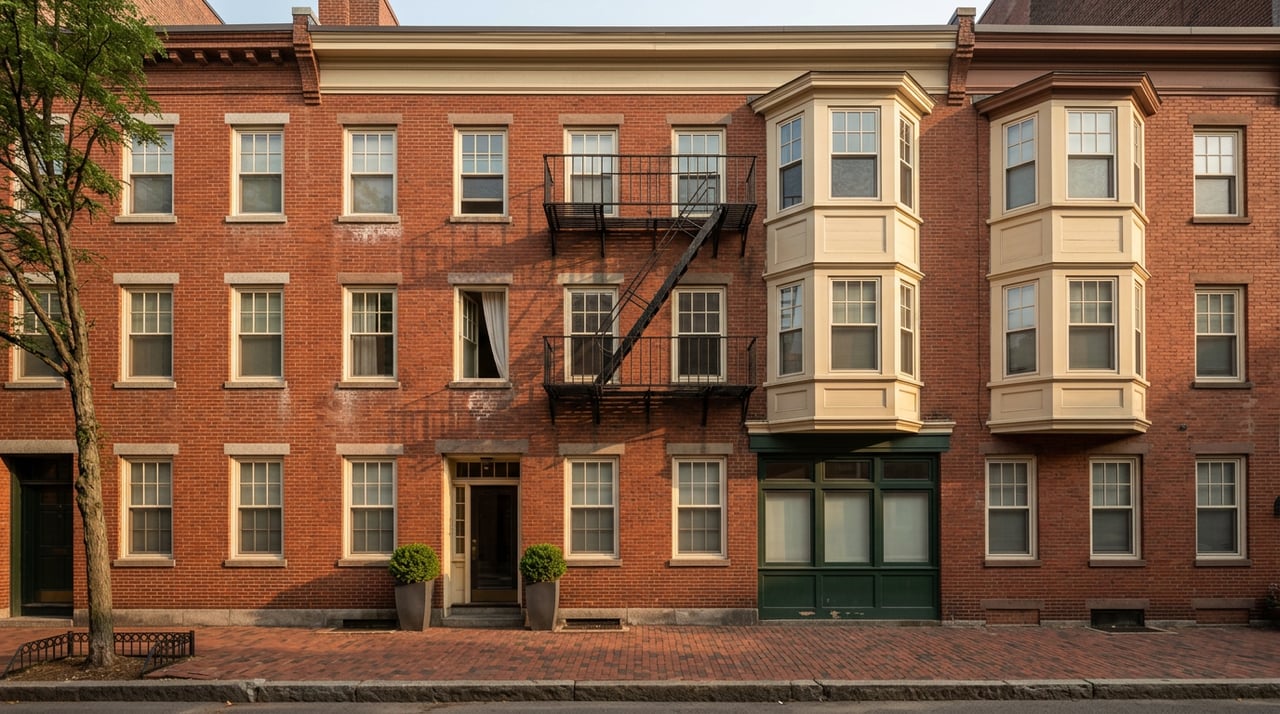
Back Bay is a protected historic district. Boston.gov describes it as a place that reflects changing architectural styles from the mid-to-late 19th century and early 20th century.
For you as a buyer, that often means brownstones, vintage details, unique floor plans, and smaller building footprints. You may find more architectural charm and more one-of-a-kind layouts, but you may also see older systems, building restrictions, or less standardized amenity packages.
Seaport condos: newer and more full-service
Seaport has a much newer feel. According to Boston.gov’s Seaport historical and planning information, much of the district sits on filled land and has grown through major mixed-use development.
For buyers, that usually translates to newer towers, modern finishes, larger amenity packages, and buildings designed around today’s lifestyle preferences. If you want features like concierge service, elevators, resident lounges, fitness centers, and garage parking, Seaport is often where you will see more of them in one place.
HOA fees: compare buildings, not neighborhoods
One of the biggest mistakes condo buyers make is assuming one neighborhood always has lower condo fees. In reality, HOA fees are building-specific.
Recent examples from the market show just how wide the range can be. A small Back Bay unit was marketed with a $168.41 monthly HOA fee, while a luxury Back Bay condo carried a $7,604 monthly condo fee. In Seaport, one waterfront condo article cited a $2,067 monthly fee, and a penthouse listing showed a $21,870.83 monthly HOA fee plus a parking fee.
What to look at beyond the monthly fee
The monthly number only tells part of the story. You should also ask about:
- What the condo fee covers
- Whether reserves appear healthy
- Any upcoming capital projects
- Any current or recent special assessments
- Whether parking, concierge, or exterior maintenance are included
That last point matters. One Back Bay listing also referenced $23,075 in special assessments, which is a good reminder that a lower monthly HOA does not always mean a lower total cost of ownership.
Transit and commute differences
Commute style is another major divider between these neighborhoods.
Back Bay is stronger for rail access
If you want a traditional transit commute, Back Bay has a clear edge. Boston.gov’s Newbury Street transportation page notes access to Arlington, Copley, and Hynes on the Green Line, plus Back Bay Station on the Orange Line and commuter rail.
Back Bay also scores very highly on neighborhood mobility. Redfin rates it 97/100 for walkability, 96/100 for transit, and 87/100 for biking, as cited in the same research summary.
Seaport relies on a different mix
Seaport’s transit story is improving, but it works differently. The North Station to Seaport multimodal corridor plan is aimed at better bus service and improved connections between North Station, South Station, and Seaport.
The city has also opened a Pier 10 commuter ferry stop connecting North Station, Fan Pier, and the Eastern Seaport on weekday commute trips. Walking has also become easier through wayfinding improvements in the South Boston Waterfront.
What that means for your daily routine
In practical terms, Back Bay is more rail-centric and predictable for many commuters. Seaport often works best if you are comfortable with a mix of bus service, walking, water transit, ride-hailing, and garage access.
Lifestyle: classic Boston or modern waterfront?
Both neighborhoods offer a polished urban lifestyle, but the atmosphere is not the same.
Back Bay lifestyle
Back Bay is classic Boston. Boston.gov describes the neighborhood through its unique shops, restaurants, vintage homes, and well-known destinations like Newbury Street, Boylston Street, Commonwealth Avenue, the Prudential Center, Trinity Church, and the Boston Public Library.
If you want an established streetscape and a neighborhood that feels rooted in Boston’s architectural identity, Back Bay often delivers that immediately. It tends to appeal to buyers who value character, walkability, and a more traditional urban setting.
Seaport lifestyle
Seaport feels newer, more open, and more tied to the waterfront. Boston.gov connects the South Boston Waterfront with destinations such as the Institute of Contemporary Art, Boston Children’s Museum, Boston Tea Party Museum, Society of Arts and Crafts, Fort Point arts organizations, and Martin’s Park.
If you picture sleek towers, harbor views, active public spaces, and a modern live-work-play environment, Seaport may feel more aligned with your lifestyle. It can be especially appealing if building amenities and newer finishes are high on your list.
Which Boston condo neighborhood fits you best?
The best choice often comes down to how you rank five priorities: price, character, convenience, amenities, and long-term use.
Choose Back Bay if you want:
- Historic architecture and classic Boston character
- A more established residential streetscape
- Direct access to Green Line, Orange Line, and commuter rail
- Unique layouts and older housing stock with personality
- A central location close to major Boston landmarks
Choose Seaport if you want:
- Newer construction and more modern design
- Full-service buildings with robust amenities
- Waterfront views and access to public waterfront spaces
- A more contemporary live-work-play setting
- A condo search focused on towers and amenity-rich buildings
A smart way to compare condos in both areas
If you are serious about buying in either neighborhood, it helps to compare homes using the same checklist instead of relying on vibe alone.
Look closely at:
- Price per square foot
- Monthly HOA and what it includes
- Special assessments or planned projects
- Transit access for your real commute
- Building age and maintenance needs
- Parking and storage availability
- Floor plan efficiency and natural light
- Resale potential based on building type and location
This side-by-side approach keeps the decision practical. It also helps you avoid overpaying for features you may not actually use.
Final thoughts on Back Bay vs Seaport
Back Bay and Seaport are both strong condo choices, but they serve different priorities. Back Bay offers history, texture, and one of Boston’s strongest transit setups. Seaport offers newer inventory, waterfront energy, and a more amenity-driven ownership experience.
If you want help comparing buildings, condo fees, and real tradeoffs between these neighborhoods, Urban Circle Realty can help you narrow the search with local, data-informed guidance that fits your goals.
FAQs
Which neighborhood is usually more expensive per square foot for Boston condos?
- Seaport is usually more expensive per square foot based on recent Boston.com reporting that cited Warren Residential data showing Seaport at $1,738 per square foot and Back Bay at $1,536 per square foot.
Which Boston neighborhood is better for a traditional transit commute, Back Bay or Seaport?
- Back Bay is generally better for a traditional transit commute because it has Green Line access, Orange Line service, commuter rail access at Back Bay Station, and very high walk and transit scores.
Which neighborhood has more historic condo buildings, Back Bay or Seaport?
- Back Bay has more historic housing stock because it is a protected historic district with architecture dating from the 19th and early 20th centuries.
Which Boston neighborhood has more newer full-service condo towers?
- Seaport is more likely to have newer full-service condo towers because of its more recent mixed-use and waterfront development pattern.
Are condo fees higher in Back Bay or Seaport?
- Condo fees are not reliably higher by neighborhood alone. They vary widely by building, amenities, and services, so it is best to compare each property individually.