If you've been comparing East Boston to other Boston neighborhoods this year, you've probably seen a number that doesn't add up. Condo values in the neighborhood grew only about 3.1 percent between Q1 2025 and Q1 2026, and one market report tracking closed sales through the year found the average East Boston condo actually sold for less this year than last, $663,000 across 105 closed transactions year-to-date versus $688,000 over the same window a year earlier. Meanwhile, two- and three-family properties in the same zip code appreciated 6 to 7.5 percent over that identical period, and triple-decker median sale prices crossed $1,050,000 in the first half of 2026.
Same neighborhood. Same twelve months. Two very different markets.
That split matters if you're comparing East Boston to Southie or the South End on a spreadsheet, and it matters even more if you're an investor trying to decide whether to buy a condo or a multi-family here. The headline "East Boston is cooling" isn't wrong. It's just a condo story wearing a neighborhood's name.
Why the average condo price actually looks worse than it is
Averages get pulled down by whatever's newest in the sales pool, and East Boston has spent the past couple of years adding a steady stream of freshly built, comparatively compact condos to its waterfront-adjacent blocks. 2 Maverick Sq is releasing 22 residences in phases through the end of 2026 and into 2027, priced from the $500Ks to $1M-plus. 656 Saratoga near Wood Island Station and the eight-unit boutique building at 250 Bremen in Jeffries Point have both added inventory this year. Geneva, a 19-unit building, and 277 Border, an 18-unit waterfront building that's move-in ready, round out a pipeline that's been landing new closings into the MLS every few months.
When a wave of new studios and one-bedrooms enters the closed-sales count, the average price across all condo sales can fall even though no single owner's existing unit lost value. It's a composition effect, not a devaluation. An owner who bought a two-bedroom in an established building three years ago and is watching a smaller new-construction studio close for less down the street isn't looking at a falling market. They're looking at a different unit type entering the comp set.
That distinction is easy to miss if you're only looking at one number on a portal, and it's exactly the kind of thing a market report showing months of supply alongside price data actually clarifies: condos in East Boston carried about 5.4 months of supply this year, the definition of a balanced market, while single-family homes in the same neighborhood carried just 1.9 months of supply, still squarely a seller's market. Condos closed at an average of 98.6 percent of list price this year, down slightly from 99.2 percent a year earlier. That's not collapse. That's a market where buyers finally have a little room to negotiate on the newest product, while everything else stays tight.
The other East Boston is still accelerating
Here's the part of the story that doesn't show up if you stop at the condo number. Single-family homes in East Boston appreciated roughly 5.4 percent year over year, outpacing the citywide Boston average of about 3.8 percent over the same period. The median single-family sale price climbed from around $650,000 in early 2025 to approximately $685,000 in early 2026.
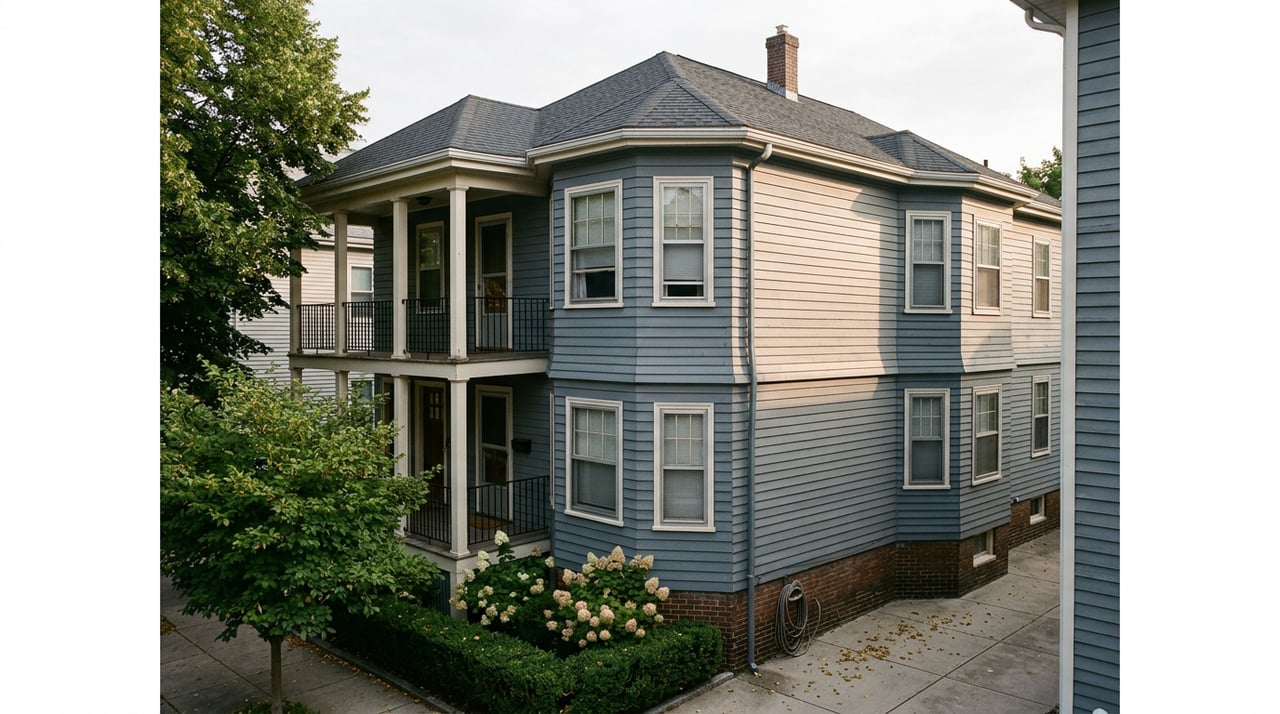
Two- and three-family properties did even better, appreciating 6 to 7.5 percent, with the median two-family sale landing near $850,000 and triple-decker sales crossing the $1,050,000 mark in recent quarters. Those are closed-sale figures, not asking prices, and the gap between what buyers hoped to pay and what sellers actually got has been widening in sellers' favor.
Here's the comparison worth sitting with:
| Property type | Recent median sale price | YoY appreciation | Months of supply |
|---|---|---|---|
| Condo | ~$520,000 | ~3.1% | 5.4 (balanced) |
| Single-family | ~$685,000 | ~5.4% | 1.9 (seller's market) |
| Two/three-family | ~$850,000 (median crosses $1.05M for triple-deckers) | 6-7.5% | Tightest of the three |
If you looked only at the blended, all-property-type inventory figure for East Boston, which sat under 90 active listings and roughly 1.4 months of supply in early 2026, you'd assume the entire neighborhood is starved for inventory in every category. It isn't. That blended number is doing a lot of work to hide the fact that condos have loosened while houses and multi-families have tightened further.
What's driving the multi-family side
Two forces are pushing on two- and three-family pricing at once. First, East Boston's rental vacancy rate sat at approximately 3.2 percent in early 2026, well below the roughly 5 percent level economists typically associate with a balanced rental market. That's up slightly from a historically tight 2.4 percent in mid-2024, but the report tracking it attributed the loosening to new rental units coming online rather than any softening in tenant demand. Landlords are still holding pricing power at renewal.
Second, buyers comparing East Boston to Charlestown and South Boston keep landing on the same conclusion: the neighborhood remains relatively undervalued for what it offers. A mid-2026 market report tracking the neighborhood pointed to this pricing gap as one of the primary drivers of investor and owner-occupant activity, pulling in buyers who want East Boston's waterfront access and Blue Line commute without paying Southie or South End prices for it. That relative discount shows up more clearly in multi-family purchase decisions than in condo shopping, where the income math on two or three rented units compounds the value of every dollar saved on the purchase price.
What this means depending on what you're buying
If you're comparing East Boston condos against other waterfront-adjacent Boston neighborhoods, the softer appreciation number isn't a red flag. It reflects new supply working through the sales pipeline and gives you more room to negotiate contingencies or price than you'd get in a tighter condo market elsewhere in the city. A 5.4-month supply condo market is a market where inspection contingencies and reasonable financing windows are still realistic asks.
If you're evaluating a two- or three-family purchase, plan for the opposite conditions. Inventory is thinner, competition is sharper, and the appreciation trend has been running well ahead of the condo side and the citywide average for over a year. If part of your strategy involves eventually converting a triple-decker into individually owned condo units, know before you make an offer that East Boston falls under Article 53, the zoning governing the East Boston Neighborhood District, and that in certain subdistricts, two- and three-family buildings require the same owner to hold title to all units, which limits how and when a condo conversion can actually happen on a given parcel.
Either way, the mistake is treating "East Boston" as one number. It's currently at least two markets moving at different speeds under the same name, and the property type you're actually buying determines which one you're in.
A few questions worth answering directly
Does slower condo appreciation mean East Boston condos are a weak investment right now? Not on its own. A 3.1 percent appreciation rate paired with 5.4 months of supply describes a market that's absorbing new construction in an orderly way, not one that's losing demand. It's a different risk profile than the multi-family side, not a worse one, and it comes with more negotiating room on price and terms than tighter Boston condo submarkets currently offer.
My neighbor's triple-decker appraised for way more than my condo did, even though we bought around the same time. Why? You're likely in different segments of the same neighborhood's market. Two- and three-family properties have appreciated at roughly double the rate of condos over the past year, driven by rental demand and a tighter supply of that specific product type. A condo purchased in a newer building is also competing against a steady stream of comparable new units entering the market, which a triple-decker isn't.
If you're weighing a condo purchase against a multi-family acquisition in East Boston, or you own a triple-decker and want a clearer read on where it sits against this year's numbers, Urban Circle Realty works this market from both sides, sales and long-term management, and can walk through what your specific property type is actually doing before you make a decision based on a headline number.